
Past News
Student’s travels and research clarify cost of Pakistanis’ climate change adaptations
March 1, 2021
How do people perceive change? How are people adapting? What costs and barriers are involved in those changes? These questions provide the lens through which Becca Nixon, a Ph.D. student in forestry and natural resources, looks at the world. “As the environment is changing, people are encountering many stressors that are driving them to adapt,” explained Nixon. “I want to help support strategies that align with their values and improve their well-being.” To achieve her goal, Nixon’s social science research focuses on people whose livelihoods are tied to the Swat and Kabul Rivers in northern Pakistan.
Student’s travels and research clarify cost of Pakistanis’ climate change adaptations
Texas grid failure strengthens calls to climate-proof energy infrastructure
February 22, 2021
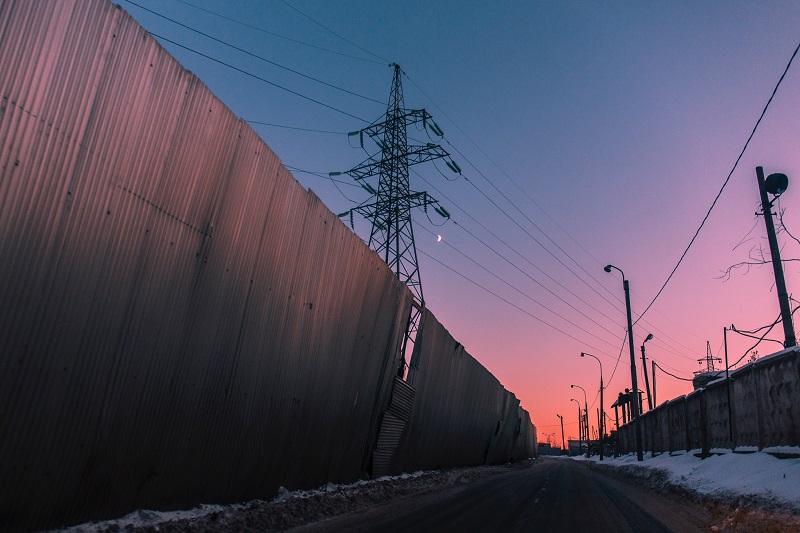
“I wouldn’t say this story is unique to Texas,” said Roshi Nateghi, an assistant professor of industrial engineering at Purdue University who studies how to improve our aging infrastructure to withstand modern and emerging challenges.
Texas grid failure strengthens calls to climate-proof energy infrastructure
Bill Author, Purdue Expert Urge Hearing For Bill On Lead Testing In Preschools, Day Cares

February 17, 2021
A state House bill would require preschools and day care centers to test for lead in drinking water and take action if lead levels are too high. Kids with lead poisoning can have trouble learning, behavioral issues, and poor kidney function. It’s especially harmful to children under the age of 6.
Bill Author, Purdue Expert Urge Hearing For Bill On Lead Testing In Preschools, Day Cares
Legislation tackles toxic "forever chemicals" found in Indianapolis' drinking water
February 15, 2021
Concern is growing nationwide about a family of toxic chemicals found in everything from fabrics to food service containers. And that concern has now reached the Indiana statehouse. These chemicals, often called "forever chemicals," are linked to severe health impacts, including cholesterol and cancer. They also don't break down naturally. And they're seemingly everywhere. They've even been found in Indianapolis' drinking water.
Legislation tackles toxic "forever chemicals" found in Indianapolis' drinking water
Tipping Point Planner Project Honored with College of Ag TEAM Award
February 11, 2021
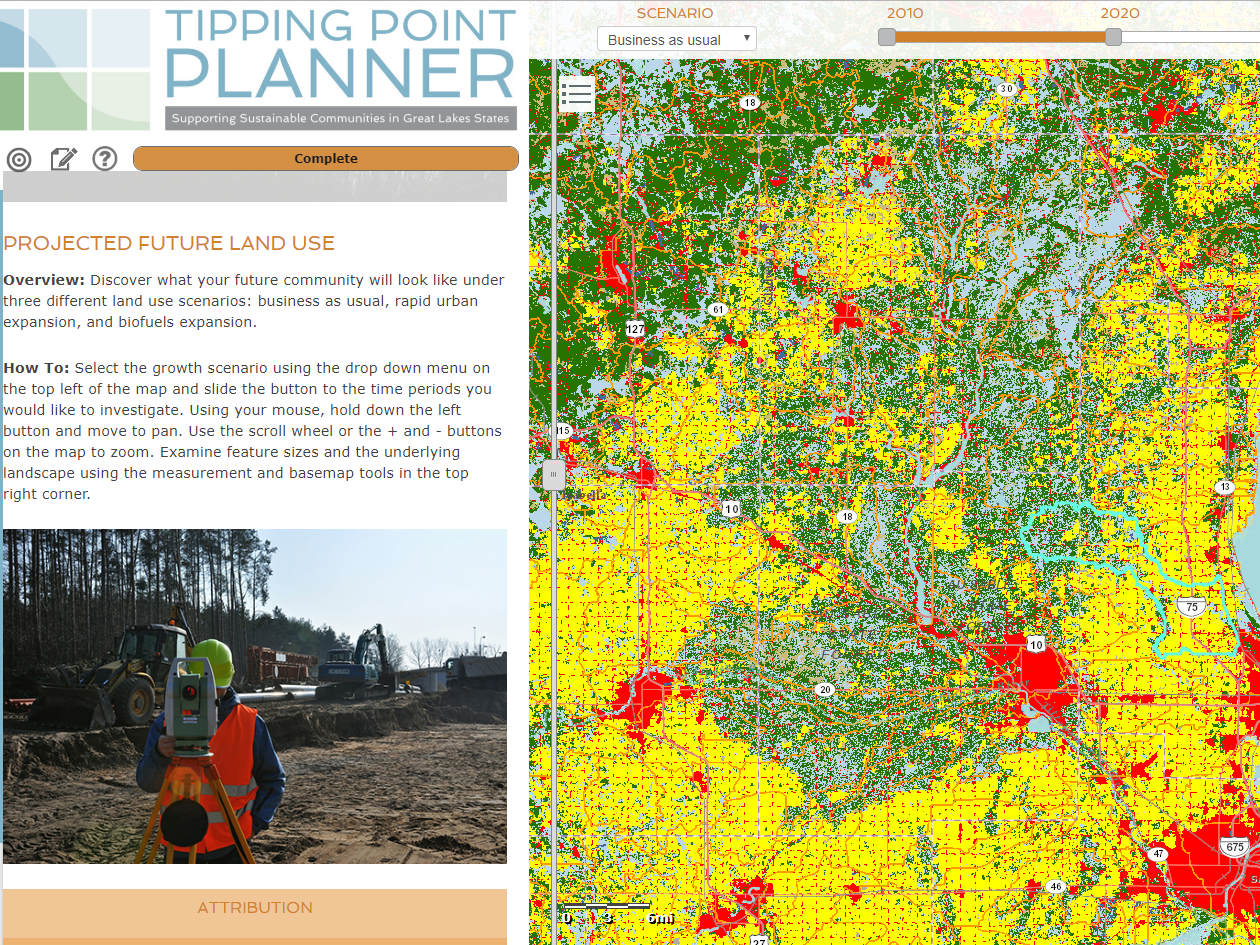
The Tipping Point Planner project, a joint effort by Illinois-Indiana Sea Grant and Purdue Extension, has been selected as a 2020 recipient of the Purdue College of Agriculture’s TEAM (Together Everyone Achieves More) Award.
Tipping Point Planner Project Honored with College of Ag TEAM Award
New mix could double concrete’s carbon uptake
February 11, 2021
Concrete is not glamorous. It is the workhorse of building materials: versatile, durable, and almost universally ubiquitous, with 30 billion tons of concrete produced every year. Cement, a component of concrete, produces 8% of the world’s carbon footprint. Looking to lower that percentage, Purdue University engineers have discovered a way to make concrete more sustainable. Their new recipe for concrete has the potential to cut carbon emissions dramatically, creating building blocks for a better world.
Ag-Analytics and agronomy professor announce research partnership
February 5, 2021
Ag-Analytics and Davide Cammarano, Purdue associate professor of agronomy, have announced a recently established research partnership. Using precision agriculture data, Cammarano’s research team will develop farm management strategies that optimize economic outcomes for businesses and individuals.
Ag-Analytics and agronomy professor announce research partnership
American Resources Corporation Acquires Exclusive Rights to Purdue University's Rare Earth Element Innovations
February 3, 2021
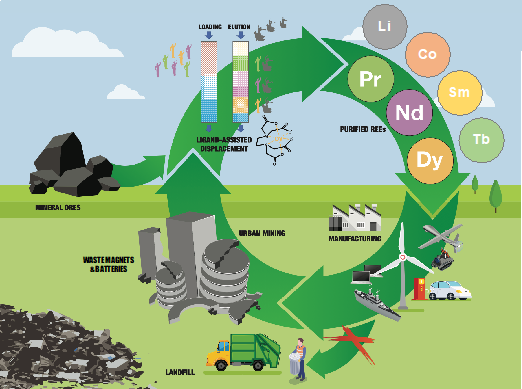
American Resources Corporation, a next generation and socially responsible supplier of raw materials to the new infrastructure marketplace, today announced that, with the addition of Hasler Ventures LLC, the Company has licensed ligand assisted displacement ("LAD") chromatography patents and knowhow to further expanded its capability in environmentally friendly separation and purification of rare earth elements. These exclusive patents and technologies, developed at Purdue University, are specific to the processing of separated and pure rare earth metals and critical elements from coal byproducts, recycled permanent magnets and lithium-ion batteries.
American Resources Corporation Acquires Exclusive Rights to Purdue University's Rare Earth Element Innovations
Discovery Park center to research safe conversion of spent railroad ties to new high-value products
January 29, 2021
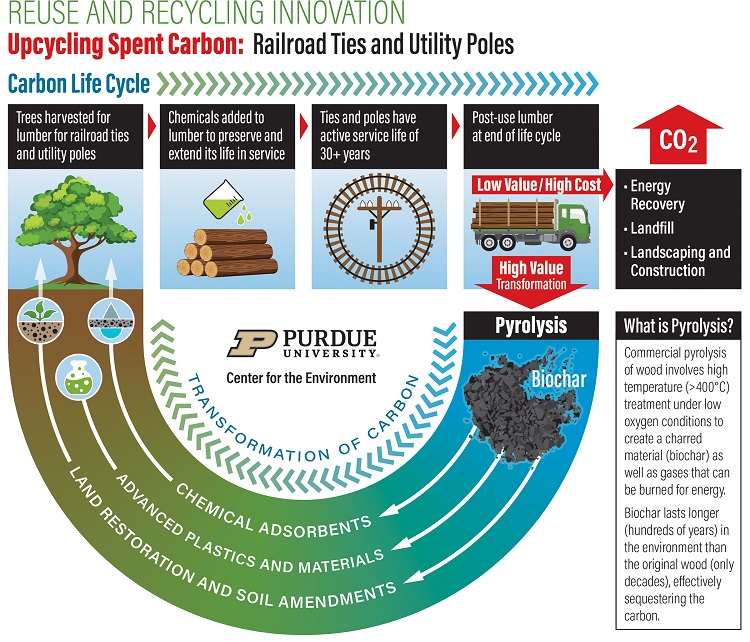
The U.S. rail system retires approximately 21 million railroad ties each year, and utility companies annually remove 2 million wooden poles from circulation, resulting in upward of 6 million tons of chemically treated wood waste. Repurposing used ties and poles into new value-added materials could significantly reduce waste and bring other benefits to the environment. Now, researchers at the Center for the Environment (C4E) in Purdue’s Discovery Park will investigate this possibility in collaboration with the newly formed Repurposing Carbon Consortium.
Discovery Park center to research safe conversion of spent railroad ties to new high-value products
McMillan and partners at Purdue take a holistic approach to water quality outcomes in the St. Mary’s Watershed
January 28, 2021
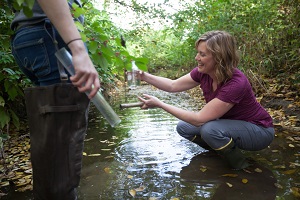
When it comes to determining the impact of agricultural best management practices on water quality on the watershed scale – the science can be noisy. No one knows that more than Sara McMillan. McMillan, who is an Associate Professor in the Department of Agricultural and Biological Engineering at Purdue University, studies how humans impact nutrient cycling in aquatic and wetland ecosystems.
McMillan and partners at Purdue take a holistic approach to water quality outcomes in the St. Mary’s Watershed