
Past News
Cold, dry planets could have a lot of hurricanes
July 24, 2019
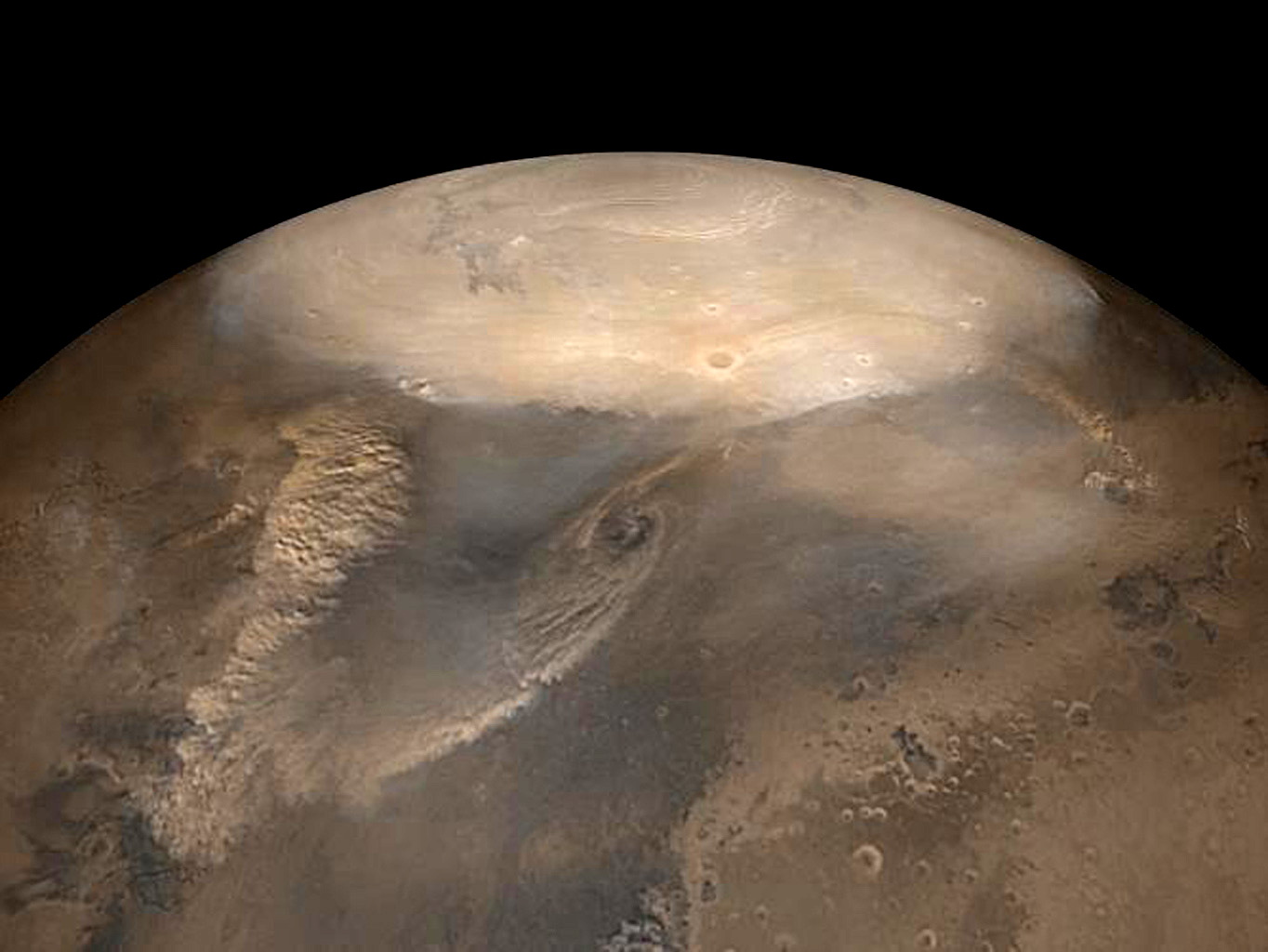
Nearly every atmospheric science textbook ever written will say that hurricanes are an inherently wet phenomenon – they use warm, moist air for fuel. But according to new simulations, the storms can also form in very cold, dry climates. A climate as cold and dry as the one in the study is unlikely to ever become the norm on Earth, especially as climate change is making the world warmer and wetter. But the findings could have implications for storms on other planets and for the intrinsic properties of hurricanes that most scientists and educators currently believe to be true.
Don’t bring the heat: New visualization technique offers alternative to heat maps to track spatial data sets
July 23, 2019
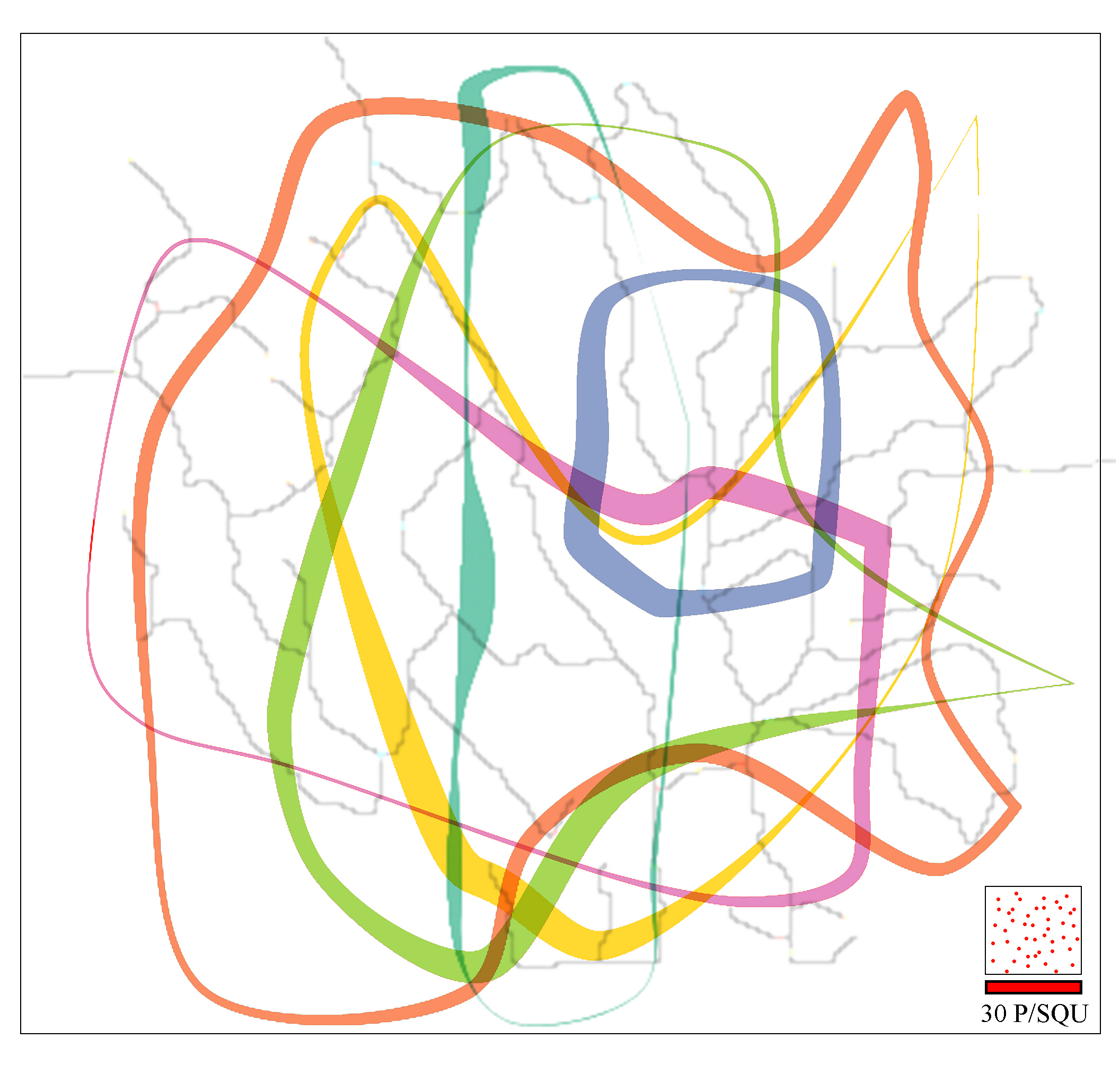
Heat maps or points on a map can be simple and typically effective ways to visualize spatial data sets. But when that data involves many different types of objects – such as planning resources for a city or tracking possible enemy locations for military strategy – these conventional visualization methods can make it nearly impossible to categorize and compare data.
Don’t bring the heat: New visualization technique offers alternative to heat maps to track spatial data sets
Indiana State Museum to host local premiere of ‘Global Soundscapes: Mission to Record the Earth,’ an interactive film for families
July 11, 2019
The premiere of “Global Soundscapes: Mission to Record the Earth,” showcasing the landscape and sound ecology work of Bryan Pijanowski, a Purdue University professor of forestry and natural resources and C4E affiliate, will be featured at a red carpet event at 6 p.m. July 17 at the Indiana State Museum’s Dean and Barbara White Auditorium as part of Purdue’s 150th Giant Leaps celebration.
Indiana State Museum to host local premiere of ‘Global Soundscapes: Mission to Record the Earth,’ an interactive film for families
Out with the old, in with the new
July 11, 2019
Purdue professor helps longtime grape growers embrace new technology
Ice-Free Radiative Convection Drives Spring Mixing in a Large Lake
July 10, 2019
When freshwater lakes fall below the temperature of maximum density, solar-driven radiative convection can become a major source of turbulent mixing. As the sun heats near-surface waters, the denser (warmer) waters sink rapidly throughout the water column, driving increased mixing and vertical transport. The current paper, co-authored by Dr. Cary Troy, Associate Professor in Purdue's Lyles School of Civil Engineering and C4E Affiliate, highlights the importance of this mixing mechanism as observed during a 2-week experiment at a 55m deep site in a large, ice-free lake (Lake Michigan, USA).
Ice-Free Radiative Convection Drives Spring Mixing in a Large Lake
Discovery Park and Peru’s UNCP form strategic alliance
July 9, 2019
Discovery Park is announcing the development of a Strategic Alliance Agreement between Purdue and Universidad Nacional del Centro del Peru (UNCP). This agreement will explore technical assistance, education, workforce development and professional services to further the mission of UNCP.
Study highlights nitrogen efficiency gains in corn hybrids over 70 years
July 8, 2019
During the past 70 years, hybrid corn varieties have increased both yield and nitrogen use efficiency at nearly the same pace, largely by preserving leaf function during grain filling. The Purdue University study’s findings offer strategies for corn breeders who want to continue to improve yields and nutrient efficiencies.
Study highlights nitrogen efficiency gains in corn hybrids over 70 years
How to feed the world and preserve the environment
May 21, 2019
Farmers bear much of the burden for growing the food to feed billions of people as the world's population continually trends upward. On one hand, feed the world. On the other, preserve the environment. Sylvie Brouder, a professor in the Purdue Department of Agronomy, knows it's possible to do both.
Read More about "How to feed the world and preserve the environment"
Mazda Foundation grants for environmental conservation programs now open
May 15, 2019
Through the Mazda Foundation, Mazda and its employees work together to proactively help their neighbors to build a better, brighter future. With contributions exceeding $12.5 million since its founding in 1992, the Mazda Foundation is playing a meaningful role in helping thousands of Americans realize their aspirations and dreams. It's also important to note that programs the Mazda Foundation supports range from children's organizations and educational scholarships to food banks, environmental programs and crucial disaster relief efforts.
Mazda Foundation grants for environmental conservation programs now open
Organohalogen Flame Retardants Used in Consumer Products Cannot Be Assessed for Hazards as a Single Class, But Can Be Assessed in Subclasses, Says New Report
May 15, 2019
Since the 1970s, flame retardants have been added to materials to meet flammability standards. However, some flame retardants have migrated out of products, causing environmental contamination and damage to human health. A new report from the National Academies of Sciences, Engineering, and Medicine offers guidance to the U.S. Consumer Product Safety Commission on how to conduct a hazard assessment of flame retardants. Dr. Jennifer Freeman, Associate Professor in the School of Health Sciences and convener for C4E's Chemical Exposures signature research area, served on the Committee to Develop a Scoping Plan to Assess the Hazards of Organohalogen Flame Retardants.
Organohalogen Flame Retardants Used in Consumer Products Cannot Be Assessed for Hazards as a Single Class, But Can Be Assessed in Subclasses, Says New Report